
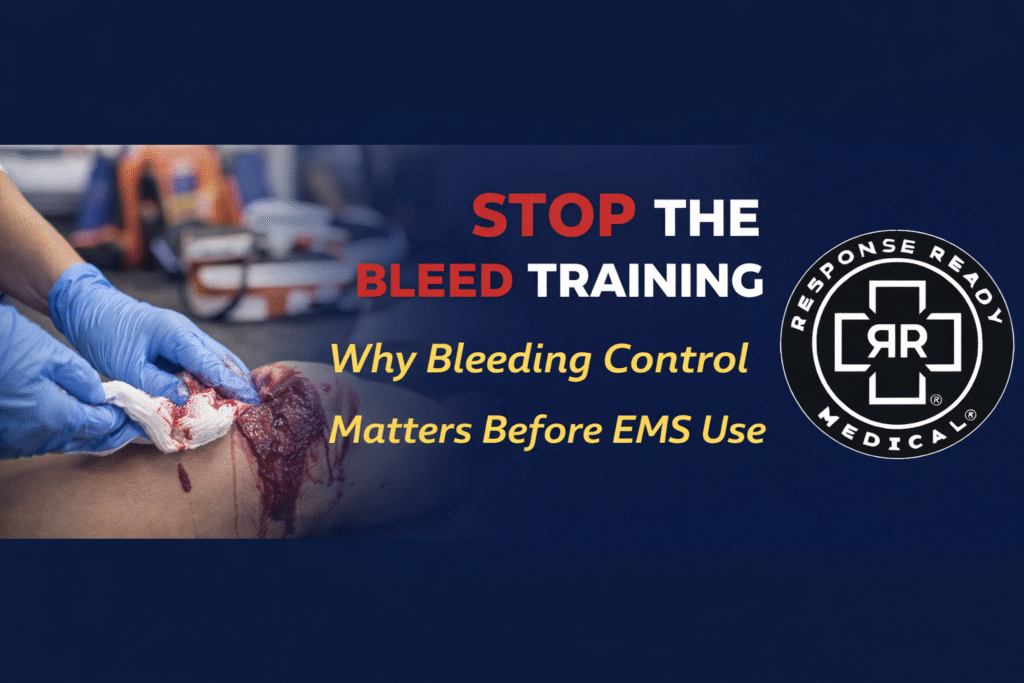
Stop the Bleed Training Why Bleeding Control Matters Before EMS Arrives
Table of Contents
-
Introduction
-
Why Uncontrolled Bleeding Is So Dangerous
-
How Quickly Blood Loss Becomes Fatal
-
What Is Stop the Bleed Training
-
Bleeding Emergencies in Spokane
-
Tourniquets and Hemostatic Gauze Explained
-
Who Should Take Stop the Bleed Training
-
Integrating Bleeding Control Into CPR and First Aid
-
Conclusion
-
Stop the Bleed FAQ
Introduction
Severe bleeding is one of the leading causes of preventable death following traumatic injury. Unlike cardiac arrest, bleeding can often be controlled by immediate action using simple techniques and equipment. Yet many people feel helpless when faced with a bleeding emergency because they have never been trained.
In Spokane Washington, traumatic injuries occur in workplaces, on roadways, during outdoor recreation, and in everyday accidents. Emergency medical services provide advanced care, but the first few minutes before they arrive are often the difference between life and death.
Stop the Bleed training empowers ordinary people to recognize life threatening bleeding and take immediate action. This article explains why bleeding control training is essential and how it saves lives before EMS arrives.
Why Uncontrolled Bleeding Is So Dangerous
Blood carries oxygen to the brain and vital organs. When severe bleeding occurs, the body cannot maintain adequate circulation. Shock develops quickly and can progress to death in minutes.
Unlike some medical emergencies, bleeding is visible and often controllable. The tragedy is that many bleeding deaths occur simply because no one knew how to intervene.
Stop the Bleed training focuses on rapid recognition and immediate action. These skills are especially important in Spokane where trauma may occur far from immediate medical care.
How Quickly Blood Loss Becomes Fatal
A person can bleed to death in as little as five minutes. This often happens faster than EMS can arrive, especially in rural areas, during heavy traffic, or in large facilities.
Severe bleeding from arms or legs is particularly dangerous. Without intervention, blood pressure drops rapidly, leading to organ failure and cardiac arrest.
Bleeding control techniques applied within the first minutes can stop hemorrhage and stabilize the patient until advanced care arrives.
What Is Stop the Bleed Training
Stop the Bleed is a national public health initiative designed to teach civilians how to control life threatening bleeding.
Training focuses on three core actions:
-
Applying direct pressure
-
Packing wounds with gauze
-
Using tourniquets correctly
Stop the Bleed courses are hands on and designed for people with no medical background. Skills are easy to learn and immediately applicable.
Response Ready Medical provides Stop the Bleed training throughout Spokane County taught by licensed EMTs and paramedics.
Bleeding Emergencies in Spokane
Spokane sees a wide range of bleeding emergencies. Construction sites experience traumatic injuries. Vehicle collisions occur daily. Outdoor recreation leads to lacerations and falls. Industrial workplaces carry risk of crush injuries and amputations.
Public events and schools also benefit from bleeding control readiness. Training ensures that bystanders can act decisively regardless of the setting.
Tourniquets and Hemostatic Gauze Explained
Tourniquets are devices designed to stop severe bleeding by compressing blood vessels. When applied correctly, they are safe and lifesaving.
Hemostatic gauze contains agents that promote rapid clotting when packed into wounds. These tools are now widely recommended for civilian use.
Training ensures proper application, timing, and safety considerations. Improper use can delay care or cause harm. Proper training prevents hesitation and errors.
Who Should Take Stop the Bleed Training
Bleeding control training is valuable for:
-
Workplace employees
-
Teachers and school staff
-
Construction and industrial workers
-
Law enforcement and security
-
Coaches and athletic staff
-
Parents and caregivers
-
Outdoor enthusiasts
-
Event staff and volunteers
In Spokane, anyone who may witness trauma should be trained.
Integrating Bleeding Control Into CPR and First Aid
Stop the Bleed training complements CPR and First Aid. Bleeding control is often the first priority in trauma situations.
Response Ready Medical integrates bleeding control into comprehensive emergency preparedness training, ensuring participants understand how to prioritize care during complex emergencies.
Conclusion
Severe bleeding is preventable. Lives are lost not because injuries are unsurvivable but because no one intervened in time.
Stop the Bleed training empowers Spokane residents to take immediate action when bleeding emergencies occur. These skills save lives long before EMS arrives.
Preparedness is responsibility. Bleeding control training turns bystanders into responders.