
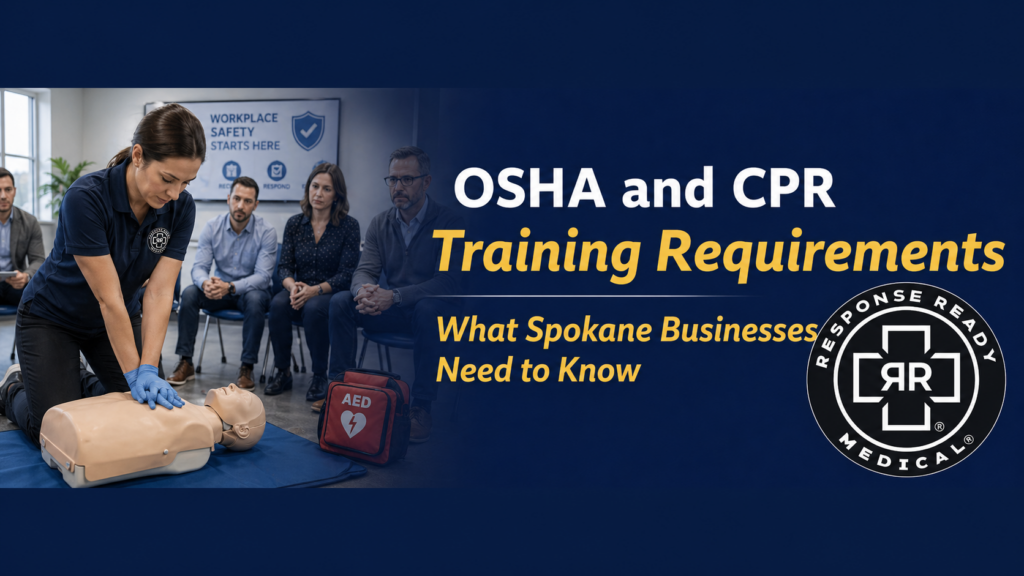
OSHA and CPR Training Requirements What Spokane Businesses Need to Know
Table of Contents
- Introduction
- What OSHA Says About CPR and First Aid
- When CPR Training Is Required in the Workplace
- Industry Specific Considerations in Spokane
- The Role of First Aid and Emergency Preparedness
- Benefits of Providing CPR Training Beyond Compliance
- Choosing the Right Training Program for Your Business
- HSI Certification and Workplace Standards
- Why Spokane Businesses Trust Response Ready Medical
- Conclusion
- OSHA CPR Training FAQ
Introduction
Workplace safety is a top priority for businesses in Spokane and Coeur d’Alene. While many employers understand the importance of CPR and First Aid training, there is often confusion about what is required under OSHA guidelines.
Understanding these requirements helps businesses stay compliant, protect employees, and create a safer work environment.
This article explains what Spokane businesses need to know about OSHA expectations and how CPR training fits into workplace safety programs.
What OSHA Says About CPR and First Aid
OSHA requires employers to ensure that medical care is readily available in the workplace. If a workplace is not in close proximity to a medical facility, employers must have trained personnel available to provide First Aid.
This includes CPR training when there is a risk of cardiac emergencies or delayed response.
OSHA does not mandate a single certification program but emphasizes preparedness and accessibility of care.
When CPR Training Is Required in the Workplace
CPR training becomes essential when:
- Emergency response time may be delayed
- Employees face higher risk environments
- Medical services are not immediately available
Industries such as construction, manufacturing, and remote work sites often require trained personnel.
Industry Specific Considerations in Spokane
Spokane has a diverse range of industries including healthcare, education, construction, manufacturing, and outdoor services.
Each industry faces unique risks. For example:
- Construction sites may require trauma response
- Offices may focus on cardiac events
- Outdoor jobs must consider environmental emergencies
Training should be tailored to these risks.
The Role of First Aid and Emergency Preparedness
CPR training is part of a broader emergency preparedness strategy. First Aid training ensures employees can respond to injuries, illnesses, and environmental conditions.
Prepared workplaces reduce injury severity and improve outcomes.
Benefits of Providing CPR Training Beyond Compliance
Beyond meeting OSHA expectations, CPR training provides:
- Improved employee confidence
- Stronger safety culture
- Reduced liability
- Faster emergency response
Businesses that invest in training demonstrate commitment to employee wellbeing.
Choosing the Right Training Program for Your Business
Select a program that offers hands on training, recognized certification, and experienced instructors.
HSI certification provides national recognition and aligns with workplace standards.
HSI Certification and Workplace Standards
HSI training meets industry expectations and provides consistent, evidence based instruction.
This ensures employees are properly trained and certification is widely accepted.
Why Spokane Businesses Trust Response Ready Medical
Response Ready Medical provides on site CPR and First Aid training tailored to Spokane businesses.
Training is delivered by EMS professionals and designed for real world application.
Conclusion
Understanding OSHA requirements is essential for workplace safety. CPR and First Aid training ensures businesses are prepared to respond effectively to emergencies.
Prepared employees create safer workplaces.