
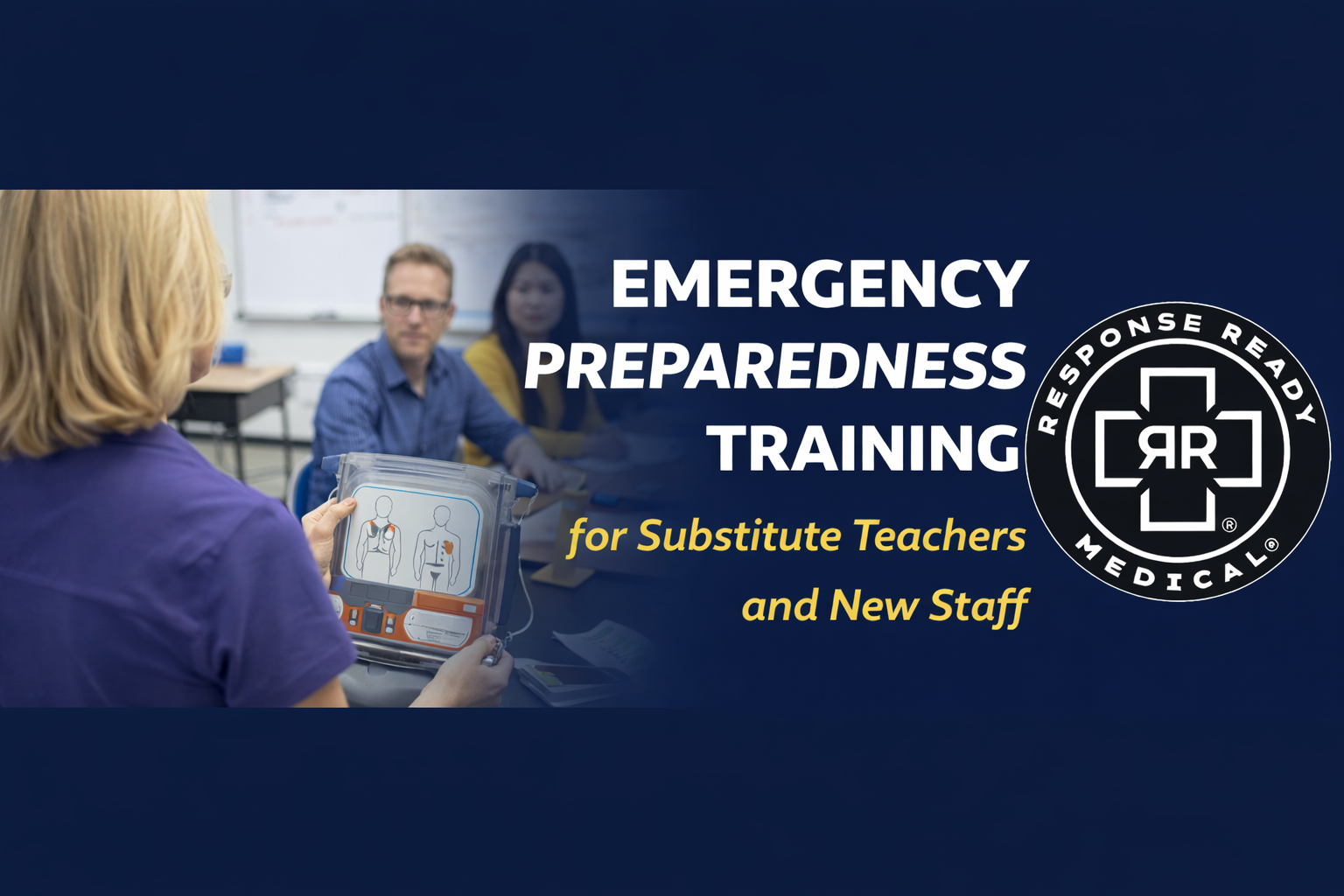
Emergency Preparedness Training for Substitute Teachers and New Staff
Table of Contents
-
Why Turnover Affects Emergency Preparedness
-
Common Training Gaps in Schools
-
Core Emergency Skills All Staff Should Know
-
Efficient Training Models for New Staff
-
Documentation and Compliance Considerations
-
How Response Ready Medical® Helps Schools Stay Prepared
Why Turnover Affects Emergency Preparedness
Schools experience regular staff changes throughout the year. Without onboarding training, new staff may be unaware of emergency procedures and equipment.
This creates risk during emergencies.
Common Training Gaps in Schools
Common gaps include
• Untrained substitute teachers
• New hires unfamiliar with AED locations
• Staff unaware of bleeding control kits
• Missing documentation
Addressing these gaps improves safety.
Core Emergency Skills All Staff Should Know
At a minimum, staff should understand
• How to recognize emergencies
• Where emergency equipment is located
• How to activate emergency response systems
• When to provide care
Efficient Training Models for New Staff
Short orientation modules and refresher sessions help onboard staff efficiently.
Blended learning options reduce scheduling challenges.
Documentation and Compliance Considerations
Training records help schools demonstrate compliance and identify gaps quickly.
Documentation should be updated as staffing changes occur.
How Response Ready Medical® Helps Schools Stay Prepared
Response Ready Medical® supports onboarding and refresher training through
• Scalable training programs
• Digital documentation support
• Ongoing compliance guidance
Preparedness remains consistent despite turnover.