CPR Classes Spokane What to Expect From Your First Training Session
Table of Contents
- Introduction
- Why CPR Training Is More Than a Certification
- What Happens Before the Class Starts
- What You Will Learn During CPR Training
- Hands On Practice and Skill Development
- AED Training and Real World Scenarios
- Common Concerns First Time Students Have
- Why Choosing the Right Training Provider Matters
- What Makes Response Ready Medical Different
- Conclusion
- CPR Class FAQ
Introduction
If you are searching for CPR classes in Spokane, you are already taking an important step toward becoming prepared for emergencies. For many people, the next question is simple. What should I expect during my first CPR training session?
Understanding what happens in a CPR class removes uncertainty and helps you get the most out of your training. Whether you are taking a class for work, personal preparedness, or certification requirements, the experience should leave you confident and capable.
Response Ready Medical provides professional CPR training throughout Spokane and Coeur d’Alene, combining nationally recognized curriculum with real world EMS instruction. This article walks you through exactly what to expect.
Why CPR Training Is More Than a Certification
Many people assume CPR training is just about earning a certification card. In reality, it is about learning how to respond during one of the most critical moments in someone’s life.
Cardiac arrest can happen anywhere. At home, at work, at the gym, or in public. The actions taken in the first few minutes determine survival.
High quality CPR training focuses on:
- Recognizing emergencies quickly
- Taking immediate action
- Performing skills correctly under pressure
- Building confidence to act
The goal is not just to pass a class. It is to be ready.
What Happens Before the Class Starts
When you arrive at a CPR class in Spokane, you can expect a structured and professional environment. Classes are typically small enough to allow individual instruction while still providing group interaction.
Instructors will introduce themselves, review course objectives, and explain how the class will be conducted. You will learn about the importance of CPR, how it fits into emergency response, and what skills you will practice.
Response Ready Medical instructors are licensed EMTs and paramedics who bring real emergency experience into the classroom. This sets the tone for practical and relevant instruction.
What You Will Learn During CPR Training
A CPR class covers several key areas that build a complete understanding of emergency response.
You will learn how to recognize cardiac arrest, assess breathing and responsiveness, and activate emergency services. You will also learn how to perform high quality chest compressions at the correct depth and rate.
Training includes adult, child, and infant CPR techniques. This ensures you can respond to emergencies across all age groups.
You will also learn how to coordinate with others during an emergency, which is critical in real world situations.
Hands On Practice and Skill Development
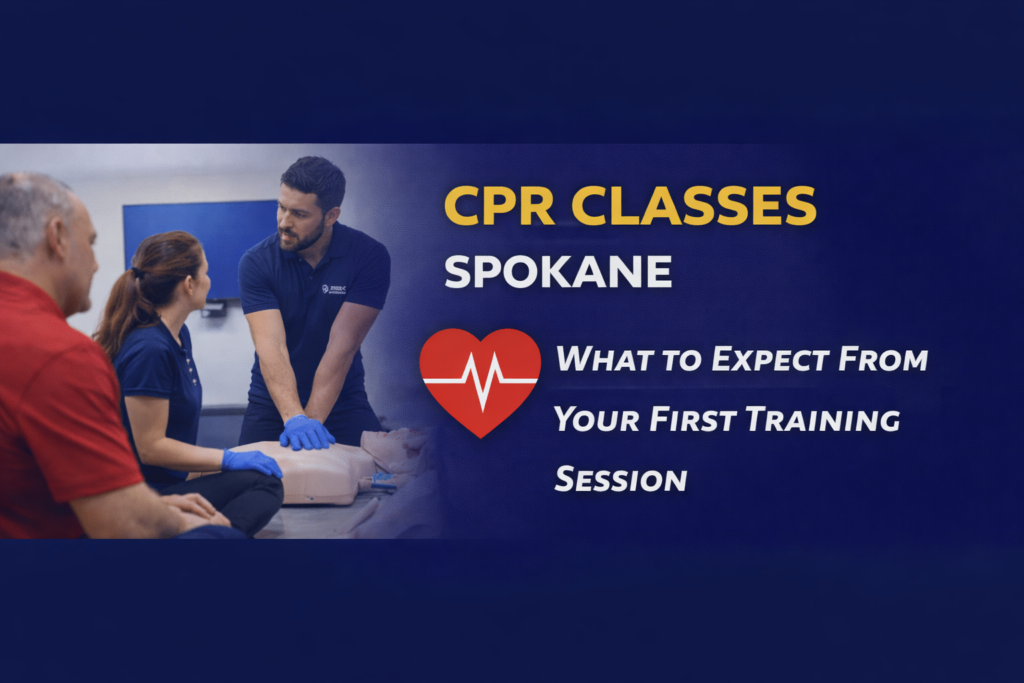
One of the most important parts of CPR training is hands on practice. CPR is a physical skill that requires repetition and muscle memory.
Participants practice compressions on training manikins under instructor guidance. Feedback is provided to improve technique, positioning, and consistency.
This practice builds confidence and ensures you are capable of performing CPR correctly.
AED Training and Real World Scenarios
Automated external defibrillators are a critical part of cardiac arrest response. CPR classes include AED training so you understand how to use these devices safely.
You will learn how to apply pads, follow prompts, and coordinate CPR with defibrillation.
Scenario based training may also be included. These scenarios simulate real emergencies and help you apply your skills in realistic situations.
Common Concerns First Time Students Have
Many first time students worry about doing something wrong. This is normal.
Common concerns include fear of hurting someone, forgetting steps, or not being strong enough to perform compressions.
Training addresses these concerns directly. Instructors provide guidance, encouragement, and correction. The goal is to build confidence, not perfection.
Why Choosing the Right Training Provider Matters
Not all CPR classes are the same. Some prioritize speed over quality. Others rely heavily on videos with minimal hands on practice.
Choosing a provider like Response Ready Medical ensures:
- Hands on instruction
- Experienced instructors
- Nationally recognized certification
- Real world application
This makes a significant difference in your ability to respond during an emergency.
What Makes Response Ready Medical Different
Response Ready Medical combines HSI curriculum with EMS experience. This creates a training environment that is both structured and practical.
Classes are designed to be engaging, interactive, and focused on real life emergencies in Spokane and surrounding areas.
Participants leave with confidence and the ability to act.
Conclusion
Your first CPR class is more than a learning experience. It is a step toward becoming someone who can make a difference when it matters most.
Understanding what to expect helps you approach training with confidence. With the right instruction, you will leave prepared, capable, and ready to respond.