
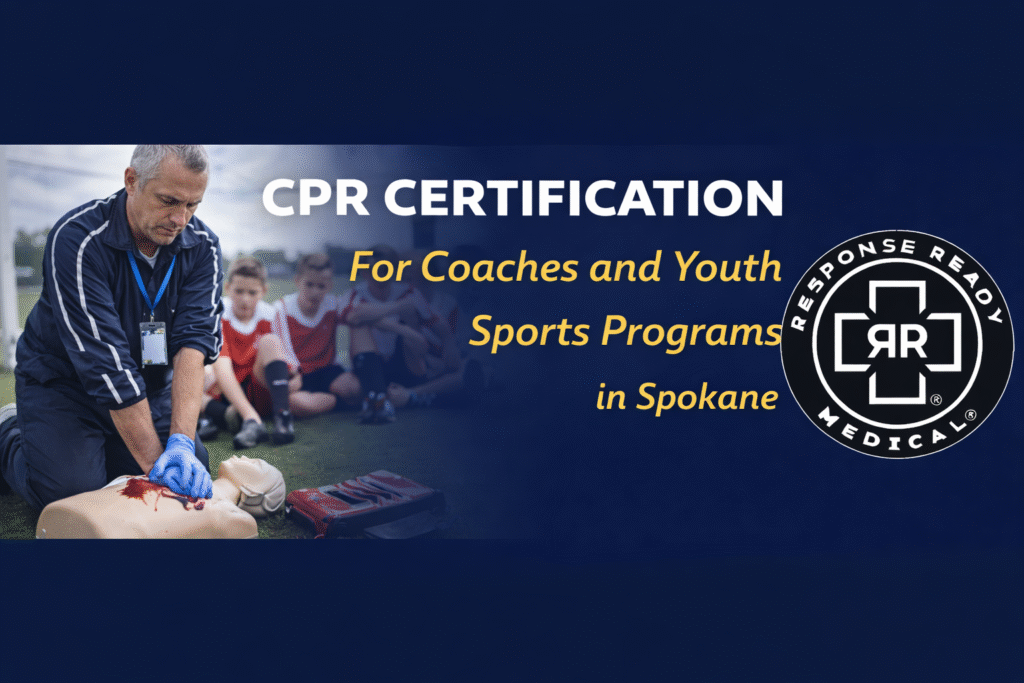
CPR Certification for Coaches and Youth Sports Programs in Spokane
Table of Contents
-
Introduction
-
Why Youth Sports Emergencies Happen
-
Cardiac Risks in Young Athletes
-
Common Medical Emergencies in Sports
-
Why Coaches Must Be CPR Certified
-
Legal and Organizational Responsibility
-
Building Safer Youth Sports Programs
-
Training Options for Spokane Teams
-
Conclusion
-
Youth Sports CPR FAQ
Introduction
Youth sports are a cornerstone of the Spokane community. From school teams to club sports and recreational leagues, thousands of children participate in athletic activities each year. While sports provide physical and social benefits, they also carry inherent medical risks.
Coaches and staff are often the first adults on scene when an athlete collapses or is injured. CPR certification ensures they can respond immediately and appropriately during life threatening emergencies.
This article explains why CPR training is essential for coaches and youth sports programs in Spokane.
Why Youth Sports Emergencies Happen
Physical exertion, heat exposure, dehydration, and underlying medical conditions increase risk during athletic activity.
Emergencies can occur even in healthy appearing athletes. Sudden cardiac arrest, heat illness, asthma attacks, and traumatic injuries are unpredictable and require immediate response.
Prepared coaches save lives.
Cardiac Risks in Young Athletes
Sudden cardiac arrest is the leading cause of death in young athletes during sports participation. It often occurs without warning and may be related to undiagnosed heart conditions.
Immediate CPR and AED use dramatically increase survival rates. Delays can be fatal.
Training ensures coaches recognize collapse as a medical emergency rather than assuming an athlete is simply exhausted.
Common Medical Emergencies in Sports
Sports related emergencies include:
-
Cardiac arrest
-
Heat exhaustion and heat stroke
-
Asthma attacks
-
Allergic reactions
-
Head injuries
-
Fractures and bleeding
CPR and First Aid training prepares coaches to manage these situations safely until EMS arrives.
Why Coaches Must Be CPR Certified
Coaches are authority figures during games and practices. Athletes and spectators look to them for direction.
CPR certification ensures coaches:
-
Act quickly and confidently
-
Coordinate emergency response
-
Use AEDs correctly
-
Provide lifesaving care
Many Spokane leagues now require CPR certification as part of coaching credentials.
Legal and Organizational Responsibility
Youth sports organizations have a duty of care to participants. Failure to provide trained supervision can increase liability.
CPR training demonstrates commitment to athlete safety and aligns with best practices recommended by medical and athletic organizations.
Building Safer Youth Sports Programs
Programs that prioritize training foster trust with parents and the community. Emergency action plans, AED access, and trained staff create safer environments.
Response Ready Medical works with Spokane sports organizations to develop comprehensive safety programs.
Training Options for Spokane Teams
Response Ready Medical provides group CPR and First Aid training for youth sports teams, schools, and leagues throughout Spokane County.
Training is taught by licensed EMTs and paramedics and tailored to athletic environments.
Conclusion
Youth sports emergencies demand immediate action. CPR certification equips coaches with the skills and confidence to respond when seconds matter.
Spokane youth sports programs are safer when coaches are trained, prepared, and empowered.
Prepared coaches protect athletes. Training saves lives.