
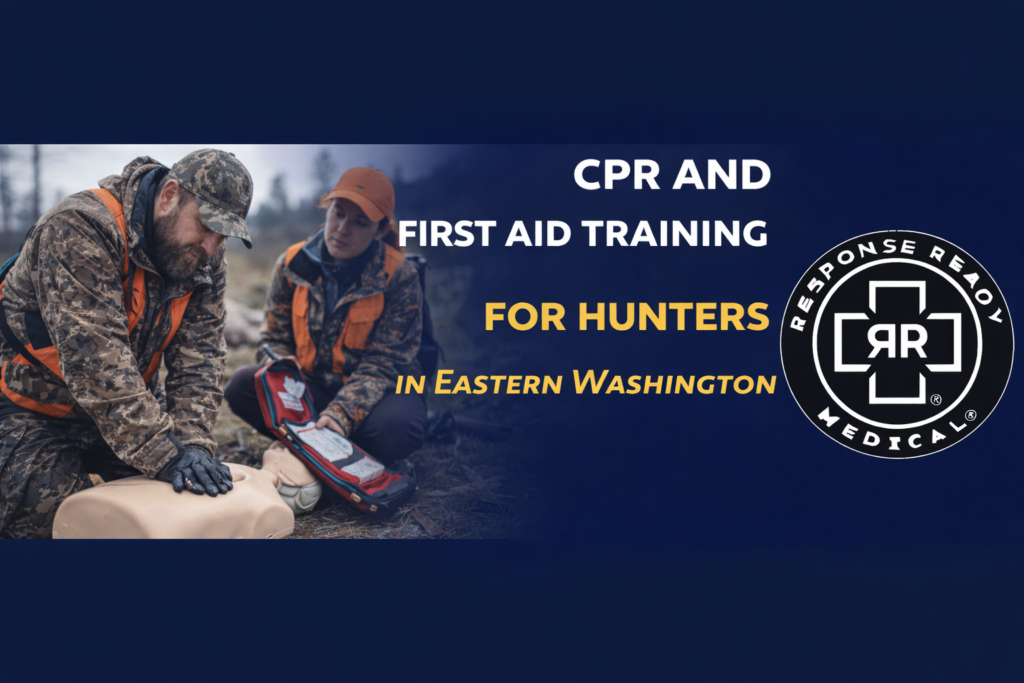
CPR and First Aid Training for Hunters in Eastern Washington
Table of Contents
-
Introduction
-
Why Hunting Emergencies Are Different
-
Common Medical Emergencies While Hunting
-
The Reality of Delayed EMS Response
-
How CPR Training Applies in Hunting Scenarios
-
First Aid Skills Every Hunter Should Have
-
Environmental Risks in Eastern Washington
-
Why Hunters in Spokane Should Train Before the Season
-
Conclusion
-
Hunter CPR and First Aid FAQ
Introduction
Eastern Washington offers some of the best hunting opportunities in the Pacific Northwest. From deer and elk seasons to upland bird and predator hunting, Spokane area hunters regularly venture into remote terrain far from immediate medical help.
While hunters often focus on equipment, navigation, and firearm safety, medical preparedness is frequently overlooked. CPR and First Aid training is one of the most important tools a hunter can carry because when an emergency happens in the field, help may be hours away.
This article explains why CPR and First Aid training is essential for hunters in Eastern Washington and how it can save lives during backcountry emergencies.
Why Hunting Emergencies Are Different
Hunting emergencies are rarely simple. Terrain is rugged, weather is unpredictable, and access to care is limited. Cell service may be nonexistent. Injuries often occur far from roads or trailheads.
Unlike urban emergencies where EMS response is relatively fast, hunters may need to provide care for extended periods. Training prepares hunters to manage injuries, stabilize patients, and make sound decisions under pressure.
Common Medical Emergencies While Hunting
Hunting related emergencies include accidental lacerations, severe bleeding, falls from uneven terrain, fractures, hypothermia, heat illness, cardiac events, and allergic reactions to insect stings.
Firearm related injuries, though rare, can be catastrophic. Immediate bleeding control and rapid assessment are critical.
Many hunting incidents also involve exhaustion and dehydration which can worsen outcomes if not addressed early.
The Reality of Delayed EMS Response
In many Eastern Washington hunting areas, EMS response may take hours. Weather conditions, terrain, and distance significantly delay rescue.
During this time, hunters must manage bleeding, maintain airway and circulation, prevent hypothermia, and monitor patient condition.
CPR and First Aid training prepares hunters for these realities and teaches how to prioritize care when resources are limited.
How CPR Training Applies in Hunting Scenarios
Cardiac emergencies do not stop during hunting season. Physical exertion, cold temperatures, and altitude can trigger cardiac events even in experienced hunters.
CPR training ensures hunters can recognize cardiac arrest and begin lifesaving care immediately. While AEDs may not be available in the field, CPR alone can sustain life until evacuation is possible.
First Aid Skills Every Hunter Should Have
Hunters should be trained in bleeding control, wound care, fracture stabilization, treatment of hypothermia and heat illness, management of allergic reactions, and patient assessment.
Training also teaches decision making such as when to evacuate immediately and when to shelter in place.
Environmental Risks in Eastern Washington
Eastern Washington hunting environments include mountains, forests, deserts, and extreme temperature swings. Sudden weather changes increase risk of exposure related illness.
First Aid training teaches how to protect patients from environmental hazards while providing care.
Why Hunters in Spokane Should Train Before the Season
Training before the season ensures skills are fresh and equipment is ready. Many hunting injuries occur early in the season when people are less conditioned.
Response Ready Medical offers CPR and First Aid training tailored for outdoor and wilderness scenarios relevant to Spokane hunters.
Conclusion
Hunting is a rewarding tradition but it carries real risk. CPR and First Aid training equips hunters to respond effectively when emergencies happen far from help.
Prepared hunters protect themselves, their partners, and their families. Training turns isolation into survivability.