
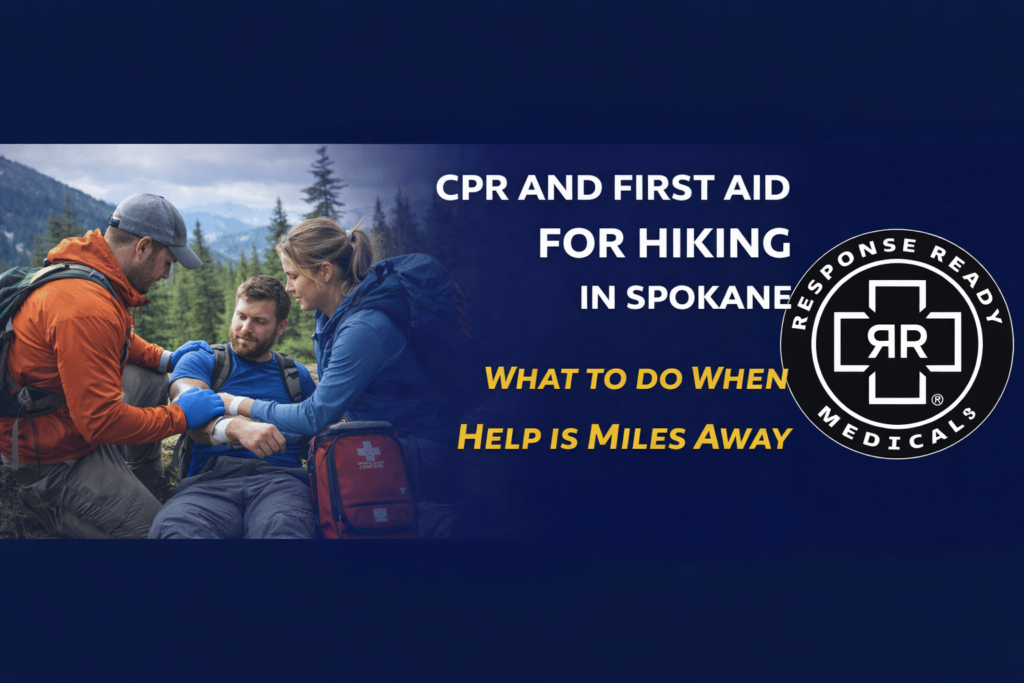
CPR and First Aid for Hiking in Spokane What to Do When Help Is Miles Away
Table of Contents
-
Introduction
-
Why Hiking Emergencies Are High Risk
-
The Reality of Delayed Rescue in Spokane
-
Most Common Hiking Emergencies
-
How CPR Applies in Remote Settings
-
Critical First Aid Skills for Hikers
-
Decision Making When You Are Alone or in a Small Group
-
What Training Changes in a Real Emergency
-
Conclusion
-
Hiking CPR and First Aid FAQ
Introduction
Hiking in Spokane and the surrounding Inland Northwest offers access to incredible landscapes, from Riverside State Park to Mount Spokane and countless backcountry trails. While these areas provide recreation and escape, they also introduce risk that many hikers underestimate.
Unlike urban environments, hiking emergencies often occur in places where emergency medical services cannot reach quickly. Response times may be extended due to terrain, weather, or distance. In some cases, rescue may take hours.
CPR and First Aid training is not just helpful in these environments. It is essential. It gives hikers the ability to respond immediately, stabilize injuries, and make informed decisions while waiting for help or planning evacuation.
Why Hiking Emergencies Are High Risk
Hiking emergencies differ from typical incidents because of isolation. A simple injury that would be minor in a city can become life threatening in the wilderness.
Factors that increase risk include uneven terrain, changing weather, physical exertion, dehydration, limited communication, and delayed rescue.
Many hikers assume accidents are unlikely. In reality, falls, medical events, and environmental exposure occur regularly on Spokane area trails.
The Reality of Delayed Rescue in Spokane
In Spokane County and Eastern Washington, many trails are located in areas with limited road access. Even when help is called, responders may need time to locate and reach the patient.
Search and rescue teams often rely on coordinates, descriptions, and sometimes foot access to reach victims. Weather conditions can further delay response.
This means hikers must be prepared to manage emergencies independently for extended periods.
Most Common Hiking Emergencies
Hiking related emergencies include falls resulting in fractures or head injuries, severe cuts and bleeding, dehydration, heat exhaustion, hypothermia, allergic reactions, and cardiac events.
Even experienced hikers are at risk, especially when terrain or weather changes unexpectedly.
Understanding these risks is the first step toward prevention and preparedness.
How CPR Applies in Remote Settings
Cardiac arrest can occur anywhere, including on the trail. Physical exertion, altitude, and underlying health conditions increase risk.
In remote settings, AED access is unlikely. This makes CPR even more critical. Continuous chest compressions can maintain circulation and delay irreversible damage.
Training ensures hikers recognize cardiac arrest quickly and begin CPR without hesitation.
Critical First Aid Skills for Hikers
Hikers should be trained in bleeding control, fracture stabilization, wound care, treatment of hypothermia and heat illness, and recognition of serious medical conditions.
Skills such as proper bandaging, use of improvised splints, and maintaining body temperature are essential.
First Aid training also teaches patient assessment so hikers can monitor changes and make informed decisions.
Decision Making When You Are Alone or in a Small Group
One of the most important aspects of wilderness First Aid is decision making. Should you stay put or attempt evacuation. Can the injured person move safely. Is the environment stable.
Training helps hikers evaluate risks, prioritize actions, and avoid dangerous decisions.
Communication is also critical. Providing clear information to emergency services improves response efficiency.
What Training Changes in a Real Emergency
Without training, most people hesitate. With training, they act. CPR and First Aid training builds confidence and provides a structured approach to emergencies.
Hikers who are trained are more likely to respond quickly, reduce complications, and improve outcomes.
Training transforms uncertainty into action.
Conclusion
Hiking in Spokane offers incredible opportunities, but it also requires responsibility. CPR and First Aid training equips hikers with the skills needed to handle emergencies when help is far away.
Prepared hikers are safer hikers. Training ensures that when something goes wrong, you are ready to respond.