
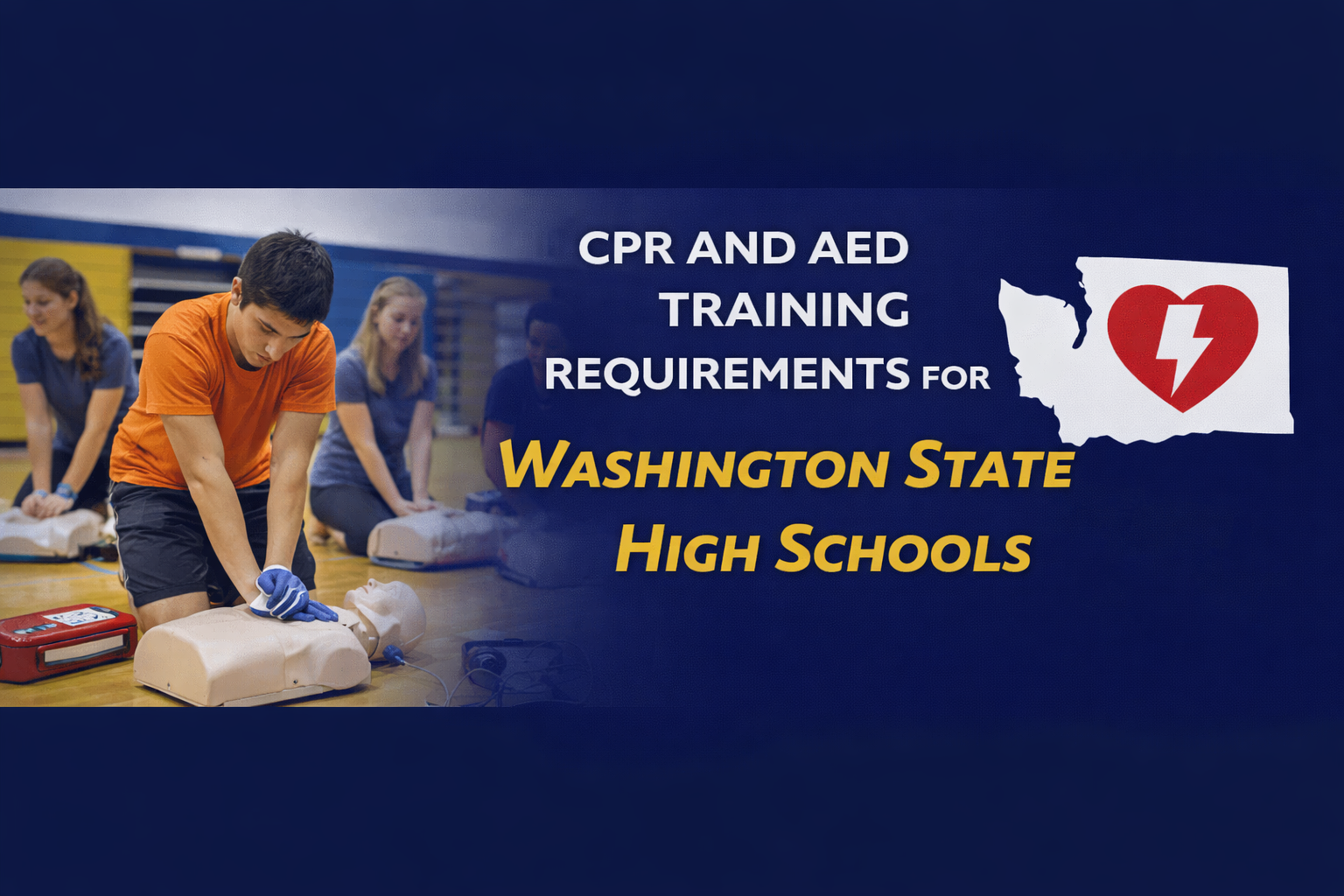
CPR and AED Training Requirements for Washington High Schools
Table of Contents
-
Why CPR and AED Training Is Required in High Schools
-
Overview of Washington CPR and AED Graduation Requirements
-
What CPR and AED Instruction Must Include
-
Who Can Provide CPR and AED Training
-
How CPR and AED Training Supports School Safety
-
How Response Ready Medical® Supports High Schools
Why CPR and AED Training Is Required in High Schools
Sudden cardiac arrest can occur without warning and survival depends on immediate action. CPR and early defibrillation dramatically increase survival rates, especially when performed before emergency responders arrive.
Washington State requires CPR and AED instruction in high schools to ensure students graduate with the knowledge and confidence to respond during a cardiac emergency. This training extends lifesaving capability beyond the school campus into homes, workplaces, and communities.
Overview of Washington CPR and AED Graduation Requirements
Washington law requires public high schools to provide instruction in
• Cardiopulmonary resuscitation
• Automated external defibrillator awareness and use
This instruction must be completed at least once before graduation. The requirement applies to public schools and is commonly integrated into health, physical education, or safety related coursework.
What CPR and AED Instruction Must Include
CPR and AED instruction must go beyond theory. Students should receive practical exposure to core lifesaving concepts.
Instruction typically includes
• Recognition of sudden cardiac arrest
• Proper chest compression technique
• How and when to use an AED
• Scene safety and activation of emergency response
Training may include video based instruction, hands on practice, or a combination of both depending on school resources and instructional design.
Who Can Provide CPR and AED Training
Washington law allows flexibility in how schools deliver CPR and AED instruction.
Training may be provided by
• School staff who have completed approved instructor training
• Community partners such as fire departments or EMS agencies
• Professional training providers experienced in CPR and AED education
Regardless of delivery method, schools should ensure instruction aligns with current resuscitation guidelines and best practices.
How CPR and AED Training Supports School Safety
CPR and AED training strengthens overall school emergency preparedness. Students trained in lifesaving skills become additional responders who can assist during emergencies involving staff, visitors, or peers.
This training also complements other safety initiatives such as AED placement, staff CPR certification, and bleeding control preparedness.
How Response Ready Medical® Supports High Schools
Response Ready Medical® partners with Washington high schools to deliver CPR and AED training that meets educational and safety goals.
Support includes
• Student focused CPR and AED instruction
• Staff CPR and AED certification programs
• AED placement guidance and readiness planning
• Integration with broader emergency response strategies
By working with experienced training partners, schools can ensure compliance while building meaningful lifesaving capability within their communities.