
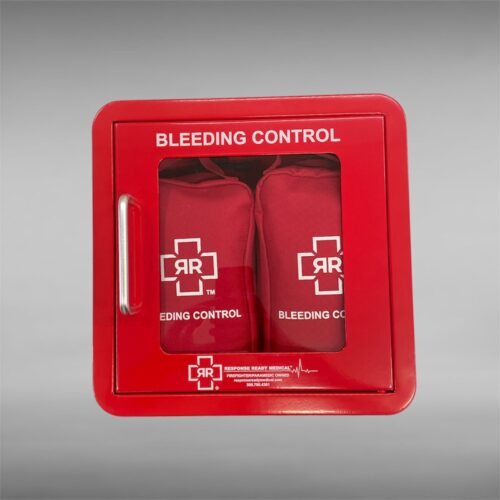
Building a Compliant School Bleeding Control Program in Washington State
Table of Contents
-
Why Bleeding Control Programs Matter
-
Selecting Compliant Bleeding Control Equipment
-
Training Staff for Real Emergencies
-
Inspection and Program Maintenance
-
Partnering With Response Ready Medical®
Why Bleeding Control Programs Matter
Uncontrolled bleeding can become fatal within minutes. Schools are uniquely positioned to provide immediate care if staff have the right tools and training.
RCW 28A.210.440 ensures that bleeding control is treated as a core element of school safety rather than an optional addition.
Selecting Compliant Bleeding Control Equipment
Compliance begins with the right supplies. Bleeding control kits must be designed for traumatic injuries and meet statutory requirements.
A compliant kit includes
• Tourniquets approved for trauma care
• Compression bandages for severe bleeding
• Protective gloves and cutting tools
• Clear printed instructions for responders
Placement should prioritize quick access in high traffic or higher risk areas.
Training Staff for Real Emergencies
Training prepares staff to act decisively under stress. Effective bleeding control training focuses on
• Identifying life threatening bleeding
• Applying direct pressure correctly
• Using tourniquets safely
• Coordinating care until emergency responders arrive
Training should be reinforced periodically to maintain confidence and skill retention.
Inspection and Program Maintenance
Ongoing readiness is required by law.
• Annual inspections verify kit completeness
• Post use inspections identify replacement needs
• Documentation supports compliance and accountability
Maintenance ensures equipment functions as intended when needed most.
Partnering With Response Ready Medical®
Response Ready Medical® helps schools translate legal requirements into practical preparedness through
• Turnkey bleeding control programs
• On site and virtual training
• Compliance focused planning support
• Ongoing program maintenance guidance
- Bleeding Control First Aid Kits Designed for School Applications
This partnership helps schools move beyond minimum requirements toward meaningful readiness.