
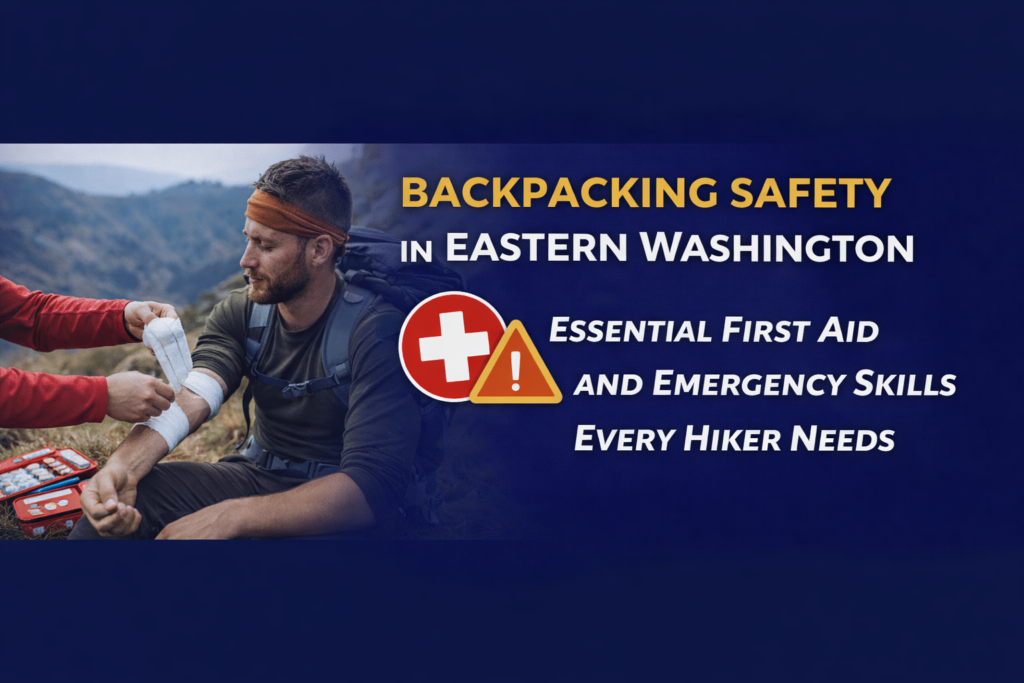
Backpacking Safety in Eastern Washington Essential First Aid and Emergency Skills Every Hiker Needs
Table of Contents
- Introduction
- Why Backpacking Increases Medical Risk
- The Challenge of Multi Day Exposure
- Common Backpacking Emergencies
- Extended Patient Care in the Backcountry
- Essential First Aid Skills for Backpackers
- Environmental Hazards in Eastern Washington
- Planning and Prevention Strategies
- Conclusion
- Backpacking First Aid FAQ
Introduction
Backpacking takes hiking to a deeper level. It involves extended time in remote environments where self reliance becomes essential. In Eastern Washington, backpackers explore mountains, forests, and backcountry areas that offer both beauty and isolation.
With that isolation comes increased risk. Injuries, illness, and environmental exposure become more dangerous when evacuation is delayed. CPR and First Aid training provides the skills needed to manage emergencies during multi day trips.
Why Backpacking Increases Medical Risk
Backpacking introduces additional variables such as fatigue, heavier loads, longer exposure to weather, and limited resources.
Even minor issues such as blisters or dehydration can escalate into serious problems over multiple days. More severe emergencies such as fractures or infections require immediate management.
Preparedness is critical.
The Challenge of Multi Day Exposure
Unlike day hiking, backpacking requires sustained decision making over time. Injuries must be managed for hours or days. Weather conditions can change rapidly.
Limited supplies mean that backpackers must use resources efficiently. Training teaches how to adapt and improvise when necessary.
Common Backpacking Emergencies
Backpacking emergencies include musculoskeletal injuries, severe blisters, dehydration, hypothermia, heat illness, infections, gastrointestinal illness, allergic reactions, and cardiac events.
Remote settings increase severity because access to care is delayed.
Extended Patient Care in the Backcountry
Backpackers must often provide extended care. This includes monitoring symptoms, managing pain, preventing infection, and maintaining hydration and nutrition.
First Aid training prepares individuals to care for patients over longer periods.
Essential First Aid Skills for Backpackers
Skills include bleeding control, wound cleaning and dressing, splinting, temperature management, hydration strategies, and patient monitoring.
Training also emphasizes prevention which is often the most effective strategy.
Environmental Hazards in Eastern Washington
Eastern Washington presents diverse environments including high elevation, forested terrain, and arid regions. Temperature swings can be extreme.
Backpackers must be prepared for both heat and cold related illness.
Planning and Prevention Strategies
Preparation includes route planning, communication plans, proper gear, and emergency supplies. Training enhances these strategies by ensuring backpackers understand how to respond when plans change.
Conclusion
Backpacking requires self reliance. CPR and First Aid training provides the foundation for safe exploration in Eastern Washington.
Prepared backpackers are confident, capable, and ready to handle emergencies in remote environments.