
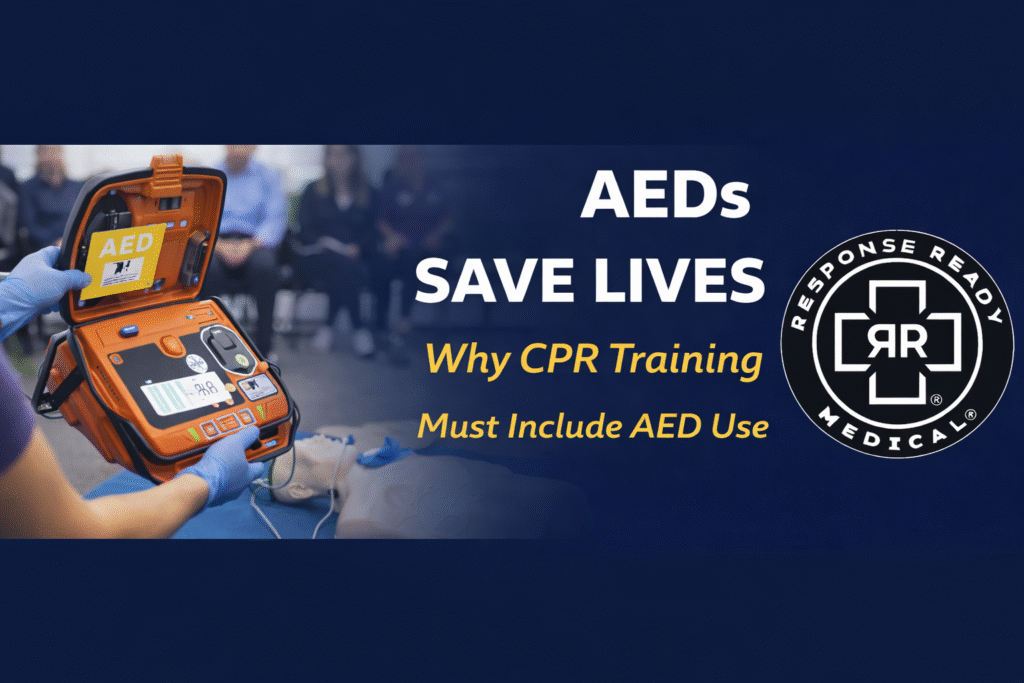
AEDs Save Lives Why CPR Training Must Include AED Use
Table of Contents
-
Introduction
-
What Is an AED and How It Works
-
Why AED Use Is Critical During Cardiac Arrest
-
AED Access in Spokane
-
Why CPR Training Must Include AED Instruction
-
Common Myths About AEDs
-
How AED and CPR Training Improves Survival
-
Conclusion
-
AED and CPR Training FAQ
Introduction
Automated external defibrillators are one of the most effective lifesaving tools available today. Yet many people hesitate to use them because they lack training or confidence.
In Spokane Washington, AEDs are widely available in schools, gyms, workplaces, and public buildings. CPR training that includes AED instruction ensures these devices are used quickly and correctly during cardiac emergencies.
This article explains why AED training is an essential component of CPR certification and how it saves lives in Spokane communities.
What Is an AED and How It Works
An AED is a portable device that analyzes heart rhythm and delivers an electrical shock if needed. The shock can restore a normal heart rhythm during certain types of cardiac arrest.
AEDs are designed to be used by the public. They provide voice prompts and step by step instructions. Despite this, training remains essential to ensure fast and confident use.
Why AED Use Is Critical During Cardiac Arrest
During cardiac arrest, the heart stops pumping blood effectively. CPR keeps blood flowing but does not correct abnormal heart rhythms.
Defibrillation is often required to restart the heart. The sooner an AED is used, the higher the chance of survival. Each minute without defibrillation reduces survival rates significantly.
AED Access in Spokane
Spokane has invested heavily in public access AED programs. Devices are commonly found in schools, government buildings, fitness centers, workplaces, and event venues.
However, an AED is only effective if someone is willing and able to use it. Training ensures bystanders recognize cardiac arrest, retrieve the device, and apply it correctly.
Why CPR Training Must Include AED Instruction
CPR and AED use work together. CPR buys time while the AED prepares to correct heart rhythm.
Training teaches participants how to integrate CPR and AED use seamlessly. This includes pad placement, following prompts, safety considerations, and teamwork during emergencies.
Response Ready Medical includes hands on AED practice in all CPR courses.
Common Myths About AEDs
Many people fear using AEDs incorrectly. Common myths include the belief that AEDs can harm patients or that only medical professionals can use them.
In reality, AEDs are extremely safe and will not deliver a shock unless it is needed. Training helps dispel fear and hesitation.
How AED and CPR Training Improves Survival
Communities with widespread CPR and AED training consistently show higher survival rates from cardiac arrest.
When bystanders act quickly, outcomes improve. Spokane benefits when more residents and employees are trained to use AEDs confidently.
Conclusion
AEDs save lives but only when they are used promptly and correctly. CPR training that includes AED instruction empowers people to act decisively during cardiac emergencies.
Spokane communities are safer when residents understand how to use these lifesaving devices.
Training turns hesitation into action and action into survival.