
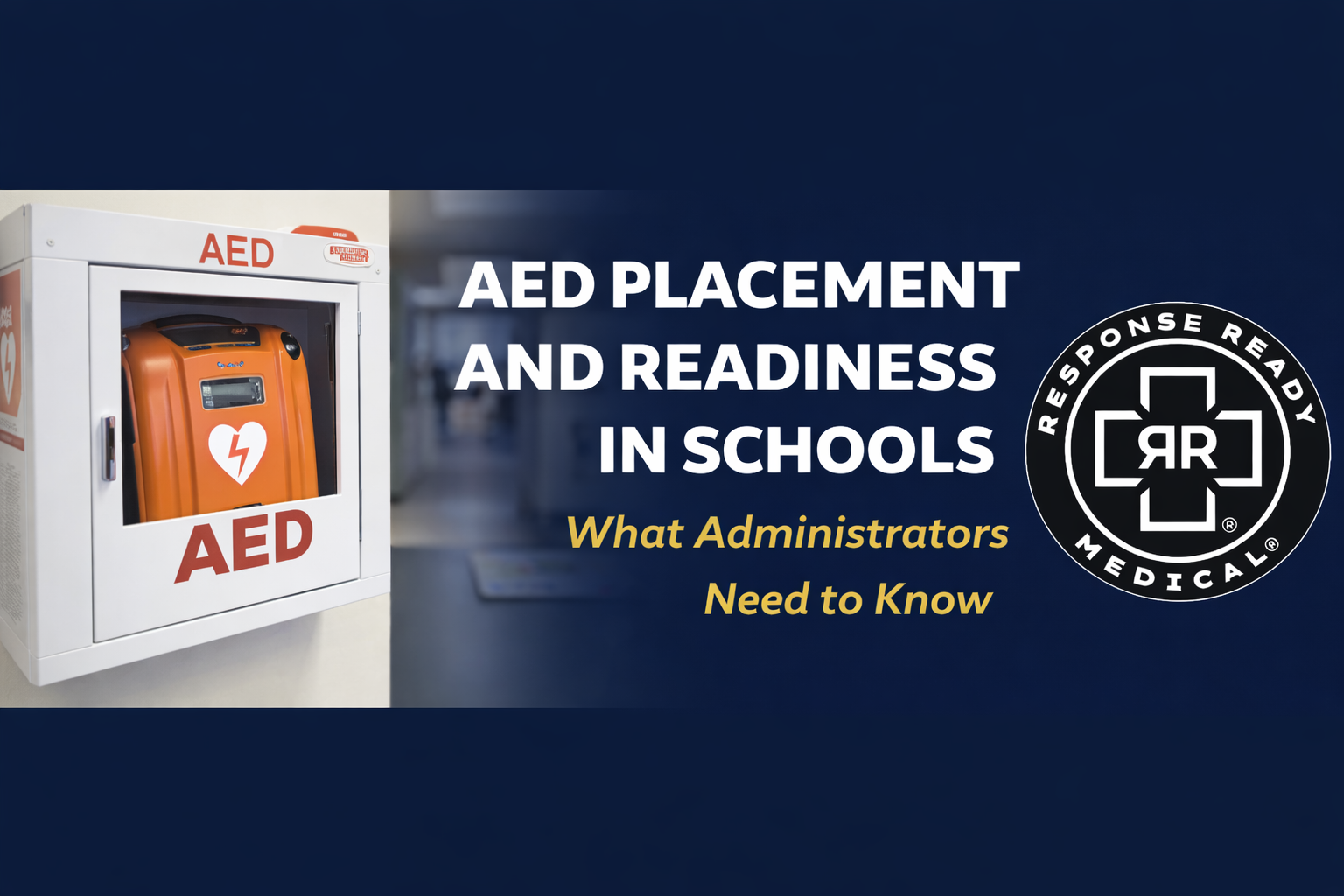
AED Placement and Readiness in Schools: What Administrators Need to Know
Table of Contents
-
Why AED Placement Matters
-
Best Practices for AED Location in Schools
-
Maintenance and Inspection Responsibilities
-
Integrating AEDs Into Emergency Response Plans
-
Training Staff and Students on AED Awareness
-
How Response Ready Medical® Supports AED Readiness
Why AED Placement Matters
Sudden cardiac arrest requires immediate defibrillation. Every minute without an AED reduces survival rates significantly.
Strategic placement ensures AEDs can be accessed quickly during emergencies.
Best Practices for AED Location in Schools
AEDs should be placed where cardiac emergencies are more likely to occur.
Common locations include
• Gyms and athletic facilities
• Cafeterias and auditoriums
• Main hallways and offices
• Near high traffic common areas
Clear signage and visibility are essential.
Maintenance and Inspection Responsibilities
AED readiness requires regular oversight.
Administrators should ensure
• Batteries and pads are within expiration dates
• Devices pass routine self checks
• Inspection logs are maintained
Maintenance is as important as placement.
Integrating AEDs Into Emergency Response Plans
AEDs should be included in written emergency response plans and drills.
Staff should know
• AED locations
• Who retrieves the AED
• How care is coordinated until responders arrive
Training Staff and Students on AED Awareness
Training increases confidence and reduces hesitation.
AED awareness training helps responders act quickly during emergencies.
How Response Ready Medical® Supports AED Readiness
Response Ready Medical® assists schools with
• AED placement planning
• Training for staff and students
• Inspection and maintenance guidance
• Integration with CPR training
This ensures AEDs are ready when needed.