
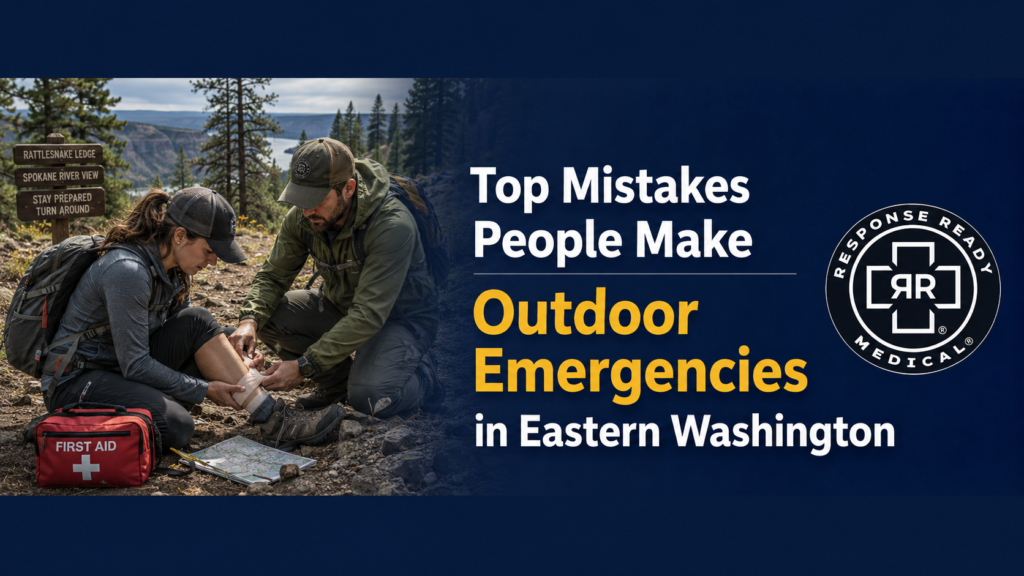
Top Mistakes People Make During Outdoor Emergencies in Eastern Washington
Table of Contents
- Introduction
- Why Outdoor Emergencies Escalate Quickly
- Underestimating the Environment
- Delaying the Decision to Turn Around
- Failing to Carry Essential Emergency Gear
- Poor Hydration and Nutrition Planning
- Ignoring Early Signs of Heat Illness or Hypothermia
- Panic and Poor Decision Making
- Waiting Too Long to Call for Help
- Lack of CPR and First Aid Training
- Conclusion
- Outdoor Emergency FAQ
Introduction
Eastern Washington offers incredible outdoor recreation opportunities including hiking, backpacking, hunting, fishing, boating, and camping. From the Spokane River and Mount Spokane to remote wilderness areas throughout the Inland Northwest, thousands of people head outdoors every year seeking adventure and relaxation.
Unfortunately, outdoor emergencies are common, and many become significantly worse because of avoidable mistakes. What begins as a manageable situation can quickly escalate into a life threatening emergency when poor decisions, lack of preparation, or delayed action occur.
Understanding the most common mistakes people make during outdoor emergencies can help Spokane area adventurers stay safer and respond more effectively when things go wrong.
Why Outdoor Emergencies Escalate Quickly
Outdoor emergencies are different from urban emergencies because help is often delayed. Terrain, weather, communication limitations, and distance from roads all complicate rescue efforts.
In Spokane and Eastern Washington, temperatures can change rapidly. Injuries may occur far from immediate assistance. Cell service may be unavailable. Small mistakes can have major consequences.
Preparation and training reduce risk significantly.
Underestimating the Environment
One of the most common mistakes outdoor enthusiasts make is underestimating the environment.
People often assume trails are easier than they are, weather will remain stable, or help will be close if needed. Eastern Washington terrain can be unpredictable and unforgiving.
Mountains, rivers, forests, and desert terrain each introduce unique hazards. Proper planning should always include weather monitoring, route awareness, and emergency preparation.
Delaying the Decision to Turn Around
Many outdoor emergencies worsen because people continue pushing forward despite deteriorating conditions.
Signs that it may be time to turn around include:
- Severe fatigue
- Sudden weather changes
- Injury or illness
- Limited daylight
- Dehydration
- Navigation uncertainty
Making the decision to stop or retreat early is often the safest choice.
Failing to Carry Essential Emergency Gear
Another major mistake is carrying inadequate emergency supplies.
Essential items include:
- First Aid kit
- Water and purification methods
- Extra layers
- Emergency shelter
- Navigation tools
- Lighting
- Communication devices
Many people assume they will not need these items during short trips. Emergencies often happen unexpectedly and preparedness matters.
Poor Hydration and Nutrition Planning
Dehydration contributes to poor judgment, fatigue, heat illness, and increased injury risk.
In Eastern Washington, dry conditions and high summer temperatures increase fluid loss rapidly. Backpackers and hikers frequently underestimate how much water they need.
Proper hydration and calorie intake are critical for maintaining physical and mental performance outdoors.
Ignoring Early Signs of Heat Illness or Hypothermia
Heat exhaustion and hypothermia often begin subtly.
People ignore symptoms such as:
- Fatigue
- Chills
- Headache
- Dizziness
- Confusion
- Nausea
These conditions can escalate rapidly into life threatening emergencies if untreated.
Recognizing symptoms early and taking corrective action is essential.
Panic and Poor Decision Making
Panic causes tunnel vision and impulsive decisions. People may move injured patients unnecessarily, separate from their group, or make unsafe evacuation attempts.
Training reduces panic by creating structure and confidence during emergencies.
Prepared individuals are more likely to remain calm and make effective decisions.
Waiting Too Long to Call for Help
Many people delay contacting emergency services because they hope the situation will improve.
This delay often worsens outcomes. Calling for help early allows rescuers more time to respond and improves survival chances.
Early communication is especially important in remote environments where rescue takes time.
Lack of CPR and First Aid Training
Perhaps the biggest mistake is entering remote environments without CPR and First Aid training.
Training teaches:
- Bleeding control
- Patient assessment
- CPR
- Environmental emergency management
- Decision making during emergencies
Prepared individuals are far more capable of stabilizing emergencies until help arrives.
Conclusion
Outdoor recreation in Eastern Washington is rewarding, but it requires responsibility and preparation. Most outdoor emergencies become worse because of preventable mistakes rather than unavoidable circumstances.
Training, preparation, and good decision making dramatically improve safety and outcomes.
Response Ready Medical provides CPR, First Aid, and Wilderness First Aid training designed specifically for Spokane area outdoor enthusiasts who want to be prepared when emergencies happen.
Outdoor Emergency FAQ
🌲 What is the most dangerous mistake people make during outdoor emergencies?
Delaying action is one of the most dangerous mistakes. People often ignore worsening conditions, postpone calling for help, or continue moving despite exhaustion or injury. Early intervention and decision making significantly improve outcomes.
🌲 Why do outdoor emergencies become more serious so quickly?
Outdoor environments limit access to medical care, shelter, communication, and rescue resources. Weather exposure, difficult terrain, and delayed EMS response all increase the severity of emergencies.
🌲 Can CPR and First Aid training really help in wilderness situations?
Absolutely. CPR and First Aid training teaches lifesaving skills that stabilize patients, control bleeding, manage environmental emergencies, and improve decision making during delayed rescue situations.
🌲 How prepared should someone be for a short day hike?
Even short hikes require preparation. Injuries and weather changes can happen quickly. Carrying basic emergency supplies and understanding First Aid principles are important regardless of trip length.