
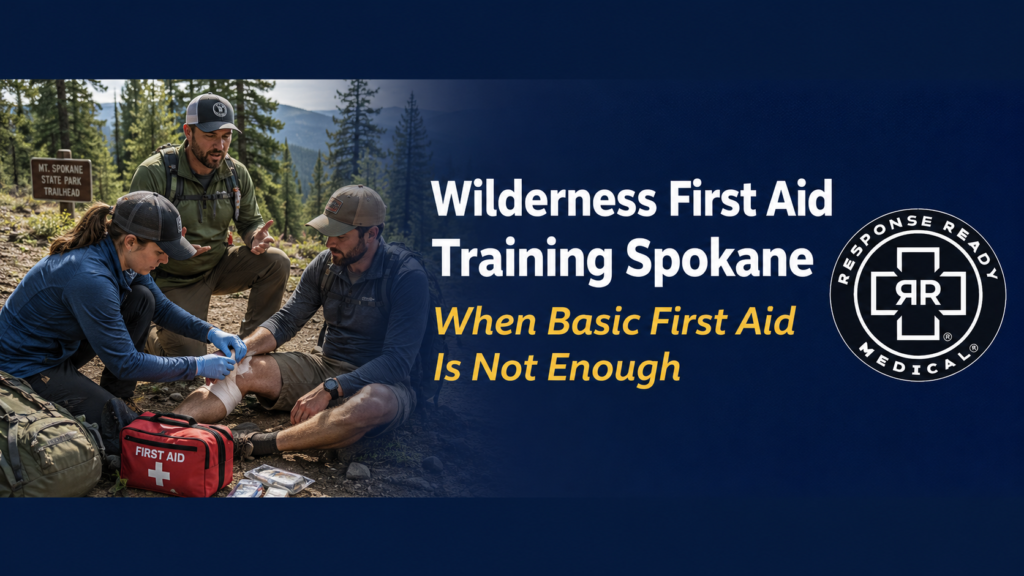
Wilderness First Aid Training Spokane When Basic First Aid Is Not Enough
Table of Contents
- Introduction
- What Is Wilderness First Aid
- Why Basic First Aid Is Different from Wilderness Care
- Spokane and Eastern Washington Outdoor Risks
- Common Wilderness Emergencies
- Extended Care and Delayed Rescue
- Critical Skills Wilderness Training Covers
- Who Should Take Wilderness First Aid Training
- Why Wilderness Training Builds Confidence
- Conclusion
- Wilderness First Aid FAQ
Introduction
Basic First Aid training is essential, but wilderness emergencies require an entirely different level of preparation. In Spokane Washington and throughout Eastern Washington, outdoor enthusiasts regularly travel into areas where professional medical care may be delayed for hours.
When rescue is not immediate, responders must provide extended patient care with limited resources. Wilderness First Aid training prepares individuals for these realities.
Whether hiking, backpacking, hunting, fishing, or working outdoors, Wilderness First Aid training equips people with the skills needed to manage emergencies in remote environments.
What Is Wilderness First Aid
Wilderness First Aid focuses on emergency care in remote settings where:
- EMS response is delayed
- Resources are limited
- Evacuation is difficult
- Environmental hazards are significant
Training emphasizes stabilization, monitoring, decision making, and extended care rather than immediate transfer to EMS.
Why Basic First Aid Is Different from Wilderness Care
Basic First Aid assumes professional medical help will arrive quickly. Wilderness care assumes you may be managing a patient for an extended period.
This changes priorities significantly.
In wilderness settings responders must:
- Monitor patient condition over time
- Prevent environmental exposure
- Make evacuation decisions
- Improvise with limited supplies
These situations require additional training and preparation.
Spokane and Eastern Washington Outdoor Risks
Eastern Washington includes mountains, forests, rivers, and remote terrain. Outdoor recreation is common year round.
Risks include:
- Falls and fractures
- Hypothermia
- Heat illness
- Severe bleeding
- Allergic reactions
- Dehydration
- Cardiac emergencies
Weather conditions can change rapidly, increasing danger.
Common Wilderness Emergencies
Wilderness emergencies often involve trauma combined with environmental exposure.
A simple ankle injury can become life threatening if it prevents evacuation in cold weather. Minor bleeding can become dangerous without proper management.
Training teaches how to recognize deterioration early and intervene appropriately.
Extended Care and Delayed Rescue
One of the defining features of wilderness emergencies is time.
Responders may need to care for a patient for hours before rescue arrives. This includes:
- Monitoring vital signs
- Preventing shock
- Maintaining body temperature
- Managing hydration and nutrition
- Reassessing injuries repeatedly
Wilderness training prepares individuals for these prolonged situations.
Critical Skills Wilderness Training Covers
Wilderness First Aid training often includes:
- Patient assessment
- Splinting and immobilization
- Bleeding control
- Environmental emergency management
- Improvised care techniques
- Evacuation decision making
These skills go beyond standard First Aid courses.
Who Should Take Wilderness First Aid Training
This training benefits:
- Hikers and backpackers
- Hunters and anglers
- Search and rescue volunteers
- Outdoor workers
- Camp leaders and guides
- Adventure travelers
Anyone spending time in remote environments should consider advanced preparation.
Why Wilderness Training Builds Confidence
Remote emergencies are stressful because resources are limited. Training reduces uncertainty and improves decision making.
Prepared individuals are more likely to remain calm, organized, and effective during emergencies.
Conclusion
Basic First Aid is essential, but wilderness environments demand more advanced preparation. Wilderness First Aid training equips Spokane and Eastern Washington outdoor enthusiasts with the skills needed to manage emergencies when help is far away.
Preparedness transforms isolation into survivability.